The Wait Is Finally Over
No other large IT company in India made its employees hold this long.
TCS moved in September 2025, Cognizant followed two months later. Infosys phased things through the back half of the year. Wipro watched all of it and kept its hand down, for a reason most employees already understood: revenue was sluggish, client budgets were not moving, and the math for a broad pay increase did not work. Then February 6 happened. An internal email went out saying merit increases would land from March 1. For most of the workforce, that closed an 18-month gap since the September 2024 cycle.
What Employees Are Actually Getting
No official percentages were published. What is known comes from employee-reported data and industry tracking through the cycle.
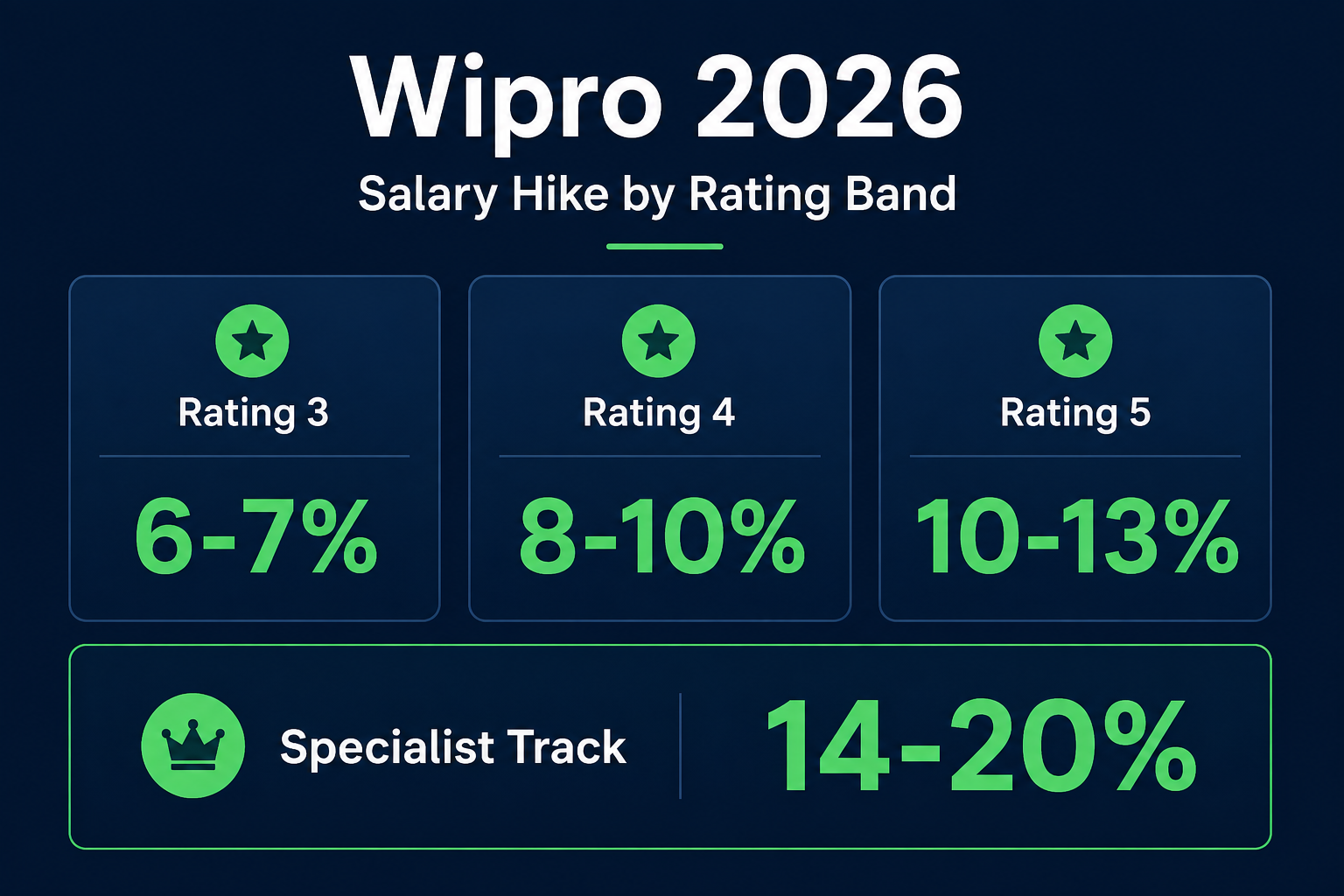
The short version: a rating 3 employee is looking at 6 to 7%. If you got a 4, expect somewhere in the 8 to 10% range. Rating 5 is a small population and they are seeing up to 13%. Then there is a separate story entirely for people on Wipro's Turbo track or in AI, cloud, and BFSI digital work. Those employees are landing effective increases of 14 to 20% once skill premiums are factored in, which is a meaningfully different outcome from the standard cycle.
The IT services sector broadly settled around 7 to 8% average for 2026. Wipro sits right there. Not a standout cycle, but not a bad one.
Worth noting: while base hikes were frozen, Wipro paid variable generously. Q3 FY26 came out at 100% of quarterly variable, paid with February salaries. The first two quarters both came in above 90%. For anyone tracking total pay, that context changes the picture a bit.
Your Letter Says a Percentage. Your Bank Account Gets Rupees.
This is where most people make a mistake. They read the hike number and feel something about it without actually calculating what changes on the 1st of next month.
Take a System Engineer at 6.5 LPA who got 7%. That is a move to roughly 6.95 LPA. Under the new tax regime in a metro city, the monthly in-hand shift is about Rs. 48,600 going to Rs. 51,200. So you are looking at Rs. 2,600 more every month, or just over Rs. 31,000 across a full year.
At 10 LPA with a 10% hike, you move to 11 LPA. That is a bigger jump in absolute terms. Monthly in-hand goes from roughly Rs. 73,000 to Rs. 78,200, so about Rs. 5,200 lands differently each month.
A Technical Lead at 16 LPA with 9% lands at 17.44 LPA. The monthly shift there is from Rs. 1,05,400 to roughly Rs. 1,12,600, so about Rs. 7,200 extra showing up each month.
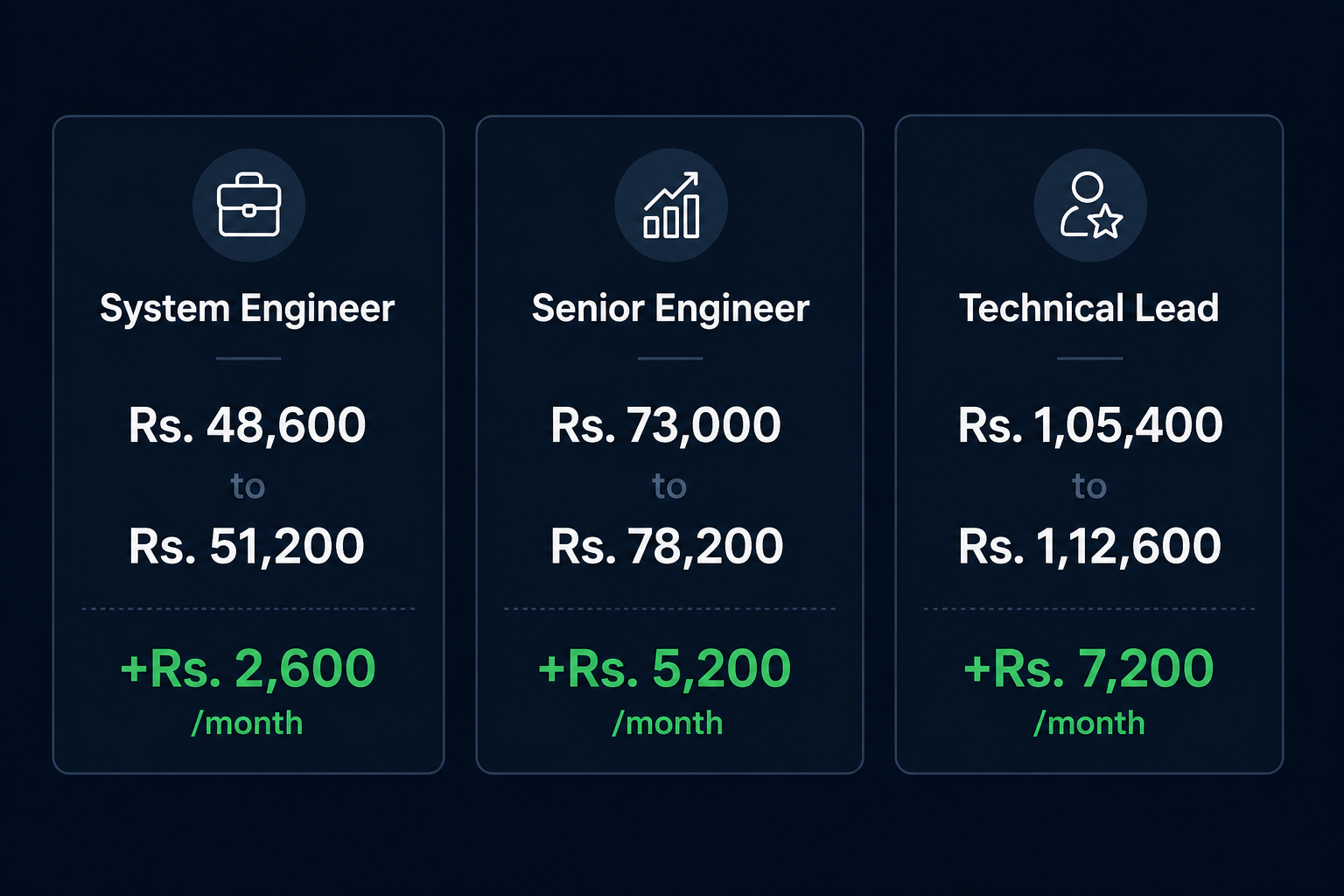
These figures assume new tax regime and PF capped at the statutory limit. Your actual number depends on your specific structure. The fastest way to get it right is to put your CTC and hike percentage into the salary hike calculator, which does this in seconds.
Eighteen Months Is a Long Time to Stand Still
India's consumer inflation through early 2026 was running at around 4.8% annually. An employee whose base did not move for a year and a half took a real cut in purchasing power through that stretch, even with the variable payouts softening it month to month.
The March hike brings things back toward normal, but only partly. A 7% increase against 4.8% inflation leaves a real gain of roughly 2 to 2.5% for a mid-band performer. That is not the kind of number that changes financial plans. What it does is roughly restore where things stood in late 2024.
How This Stacks Up Against the Rest of the Industry
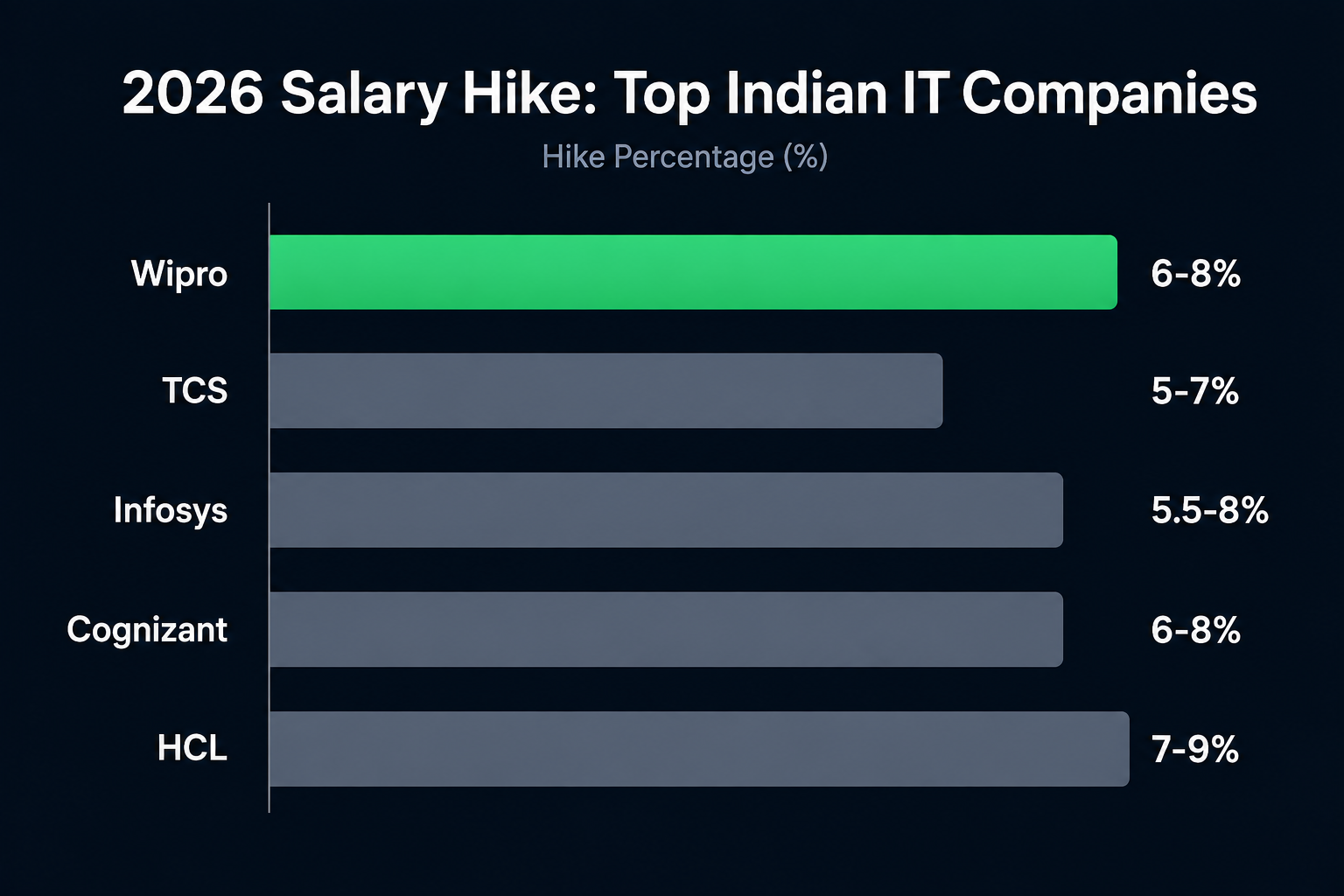
TCS gave average performers 5 to 7%, effective May 2026, with top performers going to 12%. Infosys was similar at the broad base but the specialist-track numbers were notably higher, with AI and cloud engineers in senior roles seeing 15 to 22%. Cognizant activated its hike in April 2026 at 6 to 8% for the broad base, with specialist tracks going higher. HCL ran 7 to 9% for average performers.
Wipro's broad-base outcome is ahead of TCS and in the same territory as Cognizant. The more important comparison for anyone in an AI, cloud, or data role is not between companies but between your current hike and what is actually happening in the external market right now, because that gap has been widening across all five of these companies in 2026.
Do the Math Before You Form an Opinion
Whether your letter said 6% or 12%, the number that actually matters is what hits your account on the 1st. Most people skip that step. They anchor to the percentage and carry an impression of the hike that is disconnected from what actually changed.
If your in-hand went up Rs. 3,000 a month and your rent went up Rs. 4,000 in the past year, that is a story worth knowing. If it went up Rs. 7,000 and your expenses stayed flat, that is a different story. The percentage tells you neither.
Check your new take-home at your revised CTC using the CTC to in-hand calculator. Thirty seconds and you will have the actual number.